
The US$20 pour over: Paying for the experience as much as the coffee
Estimated reading time: 9 minutes
Key takeaways
- Premium pour overs appeal to a small, committed group of coffee enthusiasts.
- Cafés should offer US$20 pour overs alongside a strong core menu.
- Clear storytelling from baristas helps customers understand higher prices.
- Automated brewers improve consistency, freeing baristas to focus on customers.
In mature coffee markets such as the US, Europe, Australia and Asia, a small number of specialty cafés have started offering high-priced pour overs, with some cups costing US$20 or more. These sit at the opposite end of the menu from the classic batch brew, which typically serves customers looking for a quick, consistent cup of coffee.
The coffees used for these premium pour overs vary. Some are Cup of Excellence or Best of Panama-winning lots, while others have been frozen for more than a year to preserve their flavour and quality.
Although the market for these coffees is small, it’s committed. A growing minority of specialty coffee enthusiasts now plan trips around which cafés serve them, and some shops are positioning themselves as “coffee destinations” as a result. For these businesses, a premium pour over menu has become close to a requirement.
However, the economics of selling these coffees have clear limits. Only a small percentage of customers order them, so very few cafés could rely on premium pour overs alone. Instead, they work best as a supplement for cafés that already perform well with their core menu, adding prestige and margin without needing to carry the business.
You may also like our article on why specialty coffee is gaining wider recognition outside the industry.

The value of a premium pour over
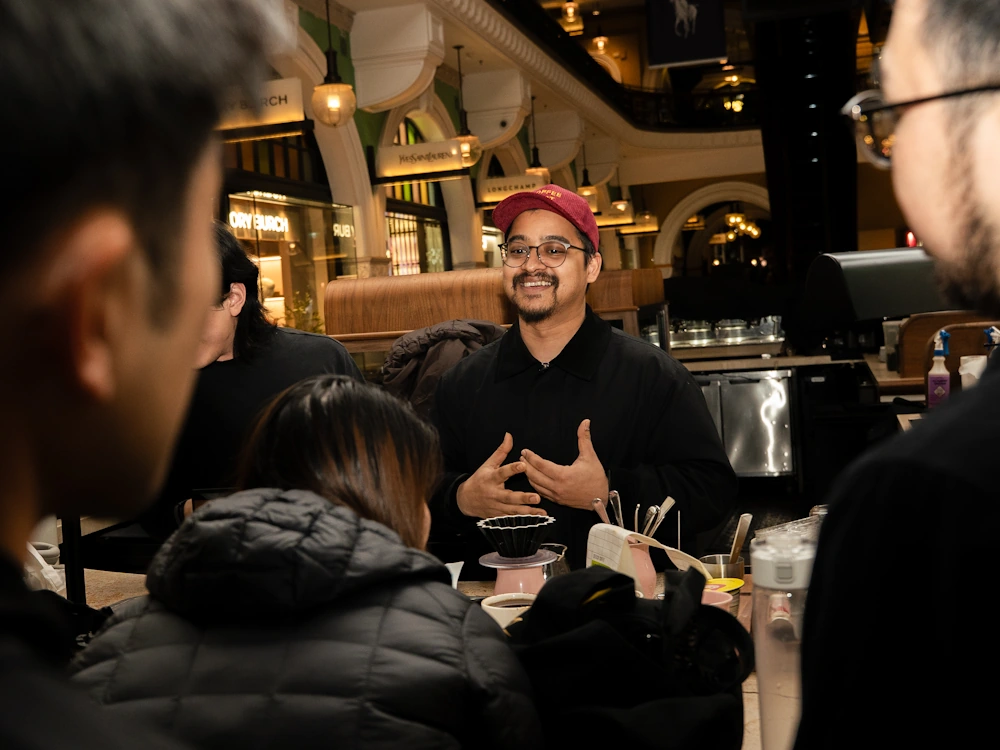
Nawar Adra, who founded Stitch Coffee in Australia, believes people are buying premium pour overs as an affordable luxury.
“There is also an element of accessible indulgence,” he says. “People want to discover something special and treat themselves without necessarily spending hundreds of dollars on a fine-dining experience or a bottle of wine. An extraordinary coffee can give you that little moment of discovery for $20.”
Nawar says the demand has grown from years of consumer education. Coffee drinkers have learnt about where their beans come from and how they are processed, and many now follow new releases they want to try.
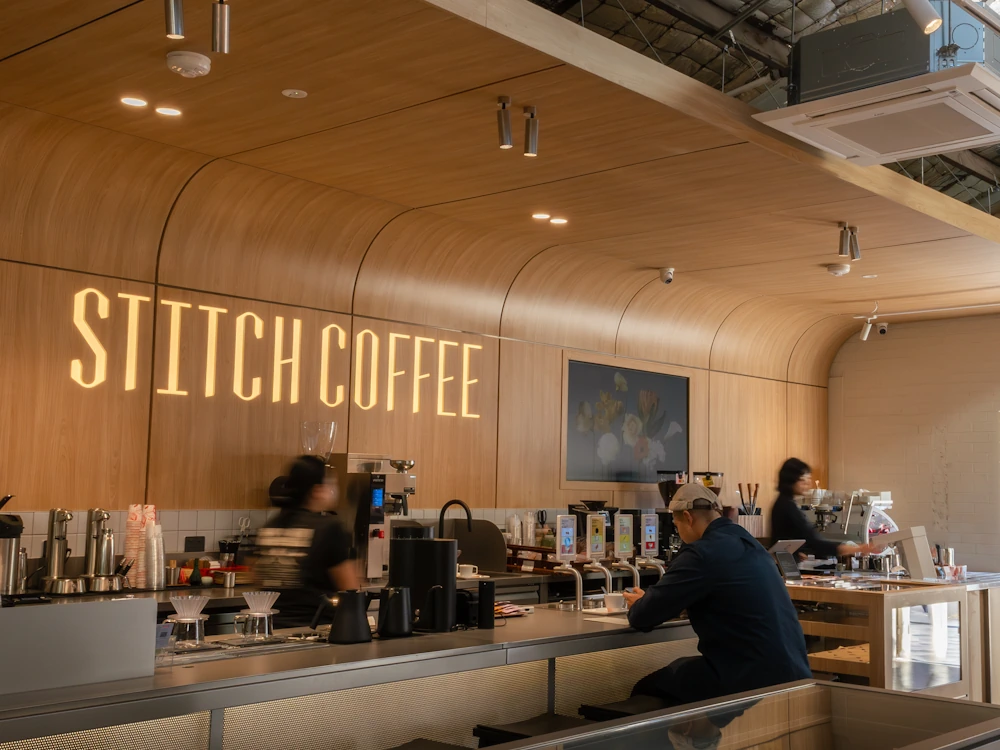
Stitch’s menu reflects this range. The café offers “four different batch brews, two cold brews, two to three blend options, five signature coffee drinks, and three to five pour overs ranging from around A$9 to A$30 a cup.”
Most customers would find it hard to justify paying the top price. For enthusiasts, however, the money buys access to coffees they rarely find elsewhere, such as a Panama Gesha, a yeast-fermented natural Catimor from China, or a thermal shock lot from Colombia.
The gap between casual drinkers and enthusiasts can challenge cafés. To attract more everyday customers, shops need to explain why these cups cost what they do, instead of relying on the price to signal quality.
“Price and quality aren’t perfectly correlated,” Nawar says. “There are many tangible and intangible factors that determine why a coffee becomes expensive, and ultimately the café can determine the price, but only the customer can decide whether it was worth it.”
Why justification matters
Most people expect coffee to be cheap. Even a batch brew or americano in a specialty café can cost more than they usually pay, so a US$20 pour over can appear shocking. Part of the reason is price memory. Consumers judge prices against what they have paid in the past, and a sudden jump can be hard to accept.
Those expectations go back a long way. Coffee has historically been undervalued, and it is still sold as a commodity almost everywhere. Instant coffee, convenience stores, and many high-street chains all charge far less than specialty cafés, so most people spend relatively little on their daily cup.
If a premium pour over is to make sense to these customers, café staff need to explain the price clearly, whatever the customer already knows about coffee. Several factors can push the price up, including where the coffee was grown, the farm, the variety, and whether it has won any competitions.
At the very top of the market, Roasters Specialty Coffee House in Dubai recently sold what it called the world’s most expensive coffee, at US$690 a cup. At that price, customers should be told the coffee’s full history and given a brewing and tasting experience to match.
Rarity can also help. A coffee from Taiwan, or an unusual lot grown in California, has novelty value, and explaining how scarce it is may persuade a curious customer to try it.
Making the price worth paying
Nawar thinks wine is a useful comparison, though he is wary of taking it too far. “I think wine can be a useful comparison because people already understand that variety, producer, origin, processing, scarcity, and craftsmanship affect value. We can borrow that language where it helps people understand coffee,” he says.
“But coffee isn’t wine, and I don’t want our industry to simply decide that becoming more sophisticated means becoming more expensive. Eventually coffee needs to develop its own notes, its own tone, its own style and its own audience.
“For me, the test is very simple: if I spend $20 on a pour-over, by the end of the experience I want to have forgotten what I paid.”
Passing this test depends largely on the barista. At this price, customers expect to hear the story behind the coffee, and it needs to sound sincere, not scripted. When it is told well, customers feel the coffee was chosen with them in mind, and they are more likely to come back for another.
The brewing itself gives baristas more chances to add value. They can show customers the whole beans, let them smell the coffee after it’s ground, and hand them a card that tells the farm’s story. Photographs can also give customers a clearer idea of where the coffee comes from.
The tasting is the final step. In some cafés, the barista tastes the coffee with the customer, and they compare the flavours they notice. Sharing the experience in this way makes it more personal, which goes a long way towards justifying the price.
It’s service, not just coffee
Selling a US$20 pour over requires investment. Beyond paying for the beans and brewing equipment, cafés need to spend time and money training baristas to brew and serve them properly. This means the model will not work for every business, although it can suit cafés with enough demand or space to support it.
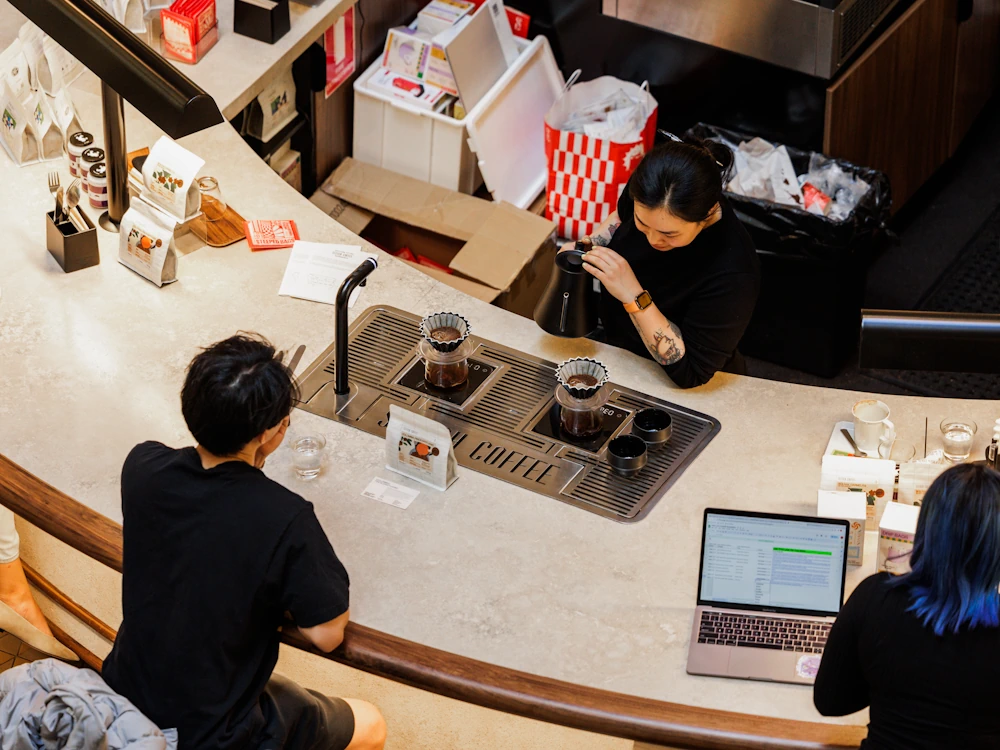
Nawar believes cafés should also set aside money for generosity. “Sometimes make that $20 coffee and share a little with the people sitting at the bar. Let them taste it. Let them tell you what they experience without correcting them because it isn’t written on your tasting notes,” he says.
“Coffee is an honest beverage; people connect flavour to their own memories. If the brew isn’t right, make it again,” he adds. “Of course, as operators we need to understand those costs and build tasting, wastage, and generosity into our pricing. Healthy margin matters. Making more money is easy; making the right healthy margin while delivering genuine value is much harder.”
Getting every cup right
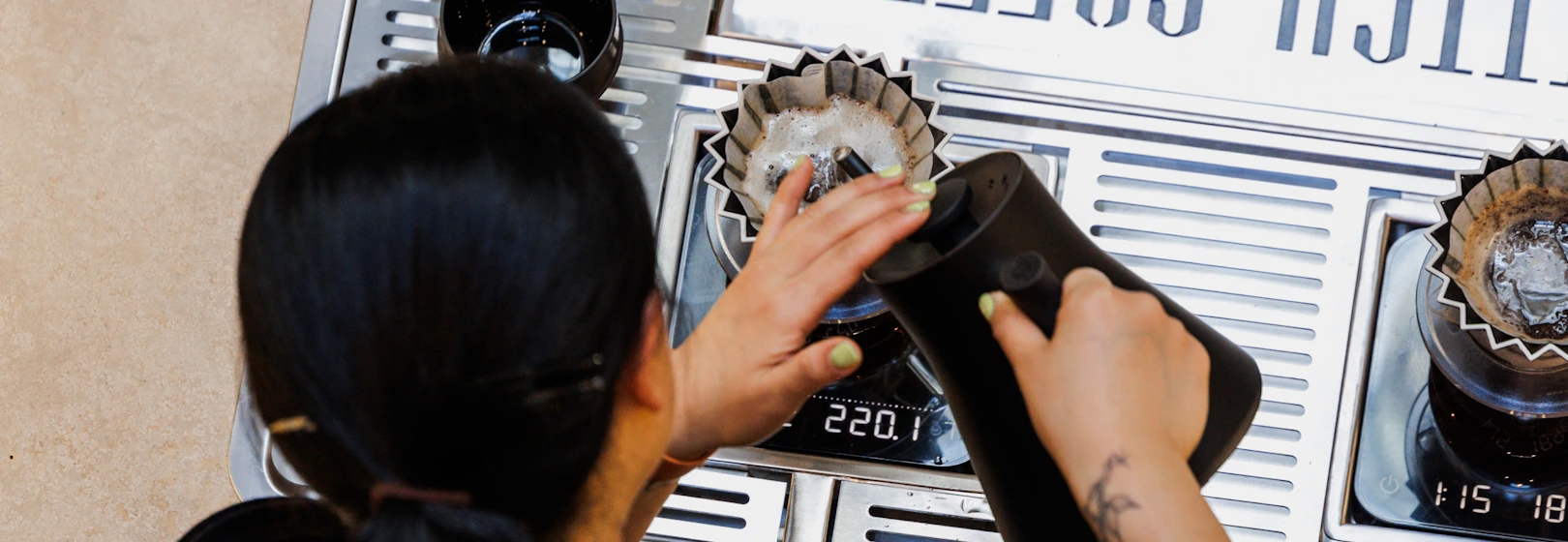
Consistency is another concern, and some cafés may use automated brewers to address it. A poorly-made coffee is a real disappointment for a customer who has paid US$20 or more. A programmed machine reduces the risk of human error and keeps each brew consistent, leaving the barista free to talk with the customer.
However, machines don’t replace the need to tell the coffee’s story. At this price, customers pay as much for the experience as for the drink, so the barista still needs to explain where the lot came from and who grew it.
Presentation is also important. Instead of leaving the drink on the counter for customers to collect, staff should brew it in front of them or bring it to their table, so the service matches what they paid.
For Nawar, every cup should meet a high standard, no matter the cost. “Our job is to make the $6 coffee excellent, and the $20 coffee extraordinary without making either customer feel more important than the other,” he says. “At Stitch, I know we’ve done our job with a $20 pour-over when the customer talks more about the coffee than the price.”
Premium pour overs give specialty cafés a way to showcase rare lots and attract travelling enthusiasts, but few customers order them. For most businesses, they work best as an addition to a strong core menu.
Success depends on training, consistent brewing, and honest storytelling, so that customers leave thinking about the coffee they tasted rather than the price they paid.
Interested in making more sales? PDG Media specialises in growing sales for coffee businesses. Check them out here.
Pour over coffee FAQs
Why do some pour overs cost US$20 or more?
Several factors drive the price, including the coffee’s origin, farm, variety, processing method, and scarcity. Competitions also play a role, as these lots sell for high prices at auction. Cafés then add the costs of training, equipment, and wastage.
Should every specialty café offer premium pour overs?
Premium pour overs will not suit every café, because only a small share of customers order them. They work for cafés with enough demand, space, and trained staff, and they perform best as an addition to everyday drinks.
Do automated pour over machines replace baristas?
No. Machines brew each cup to the same recipe, which reduces human error. However, baristas still need to explain the coffee’s story and guide the tasting, since customers pay for the experience too.
Photo credits: Stitch Coffee
Perfect Daily Grind
Want to read more articles like this? Sign up for our newsletter!

Michaela has been working in the coffee industry for over ten years. She is passionate about ensuring producers have a bright future and loves to share their stories to spread awareness for their hard work.


