How can cafés increase their ticket value per order?
Estimated reading time: 7 minutes
Key takeaways
- Record coffee prices and rising wages make volume-led growth unviable.
- Well-executed upselling lifts average tickets by around 20%.
- Food and merchandise raise ticket value but carry operational trade-offs.
- Curated, community-focused concepts turn cafés into local destinations.
Running a coffee shop has rarely been this financially demanding. Arabica futures have stayed high and volatile since early 2025, forcing owners to raise retail prices, a decision that requires careful thought, since consumer behaviour inevitably shifts in response. Some customers switch to cheaper single origins or blends; others simply visit less often.
Barista wages have risen too, part of a wider pattern of hospitality pay growing faster than most other sectors. At many independent coffee shops, payroll now consumes around a third of monthly revenue.
When the cost of goods and labour both rise faster than menu prices, volume alone can’t protect margins. Even a busy shop can still be unprofitable, which is part of why medium-sized coffee shops, in particular, are struggling.
The cafés adapting fastest have stopped pushing to sell more cups and instead focused on increasing the value of each transaction. Their tactics range from subtle prompts at the till to full food programmes and curated retail concepts.
You may also like our article on how coffee shops can tap into food trends.

Guiding customers, not selling to them
Many baristas agree that upselling, the practice of encouraging customers to upgrade to a more expensive version of the same product, can feel forced. But upselling is one of the most effective strategies cafés can use to increase ticket value per order.
Marc Tormo is a Coffee Entrepreneur and Educator at Coffee Ideas, the India National Winner at the 2025 Global Coffee Awards Origin Roasted competition, and co-founder of Naad Coffee. He argues that the framing matters as much as the tactic.
“The word ‘upselling’ often carries negative connotations because it suggests convincing customers to spend more,” he explains. “Instead, I believe cafés should think about guiding customers.”
His point is behavioural rather than semantic. Most guests don’t know what is available, whether it’s different coffee origins, alternative brewing methods, or considered food pairings. A strategic café reveals those options naturally, and ticket sales grow from curiosity rather than pressure.
Suggesting a large batch brew over a small one, offering a cold foam topping, or pairing an espresso with a pastry can raise the average ticket without changing the customer experience.
Data shows upselling can increase average ticket size by around 20%, while menu engineering and strategic pricing add a further 10 to 30% when done well. Loyalty and membership schemes, meanwhile, can increase per-visit spend by 20-30%.

The food and merchandise equation
Food is often the most reliable way for cafés to increase ticket value per order. In 2025, food sales accounted for 23% of Starbucks’ total sales, including pre-packaged sandwiches, salads, and wraps – evidence of how central convenient, high-quality food has become to consumer habits.
But coffee shops don’t necessarily need to offer a full kitchen service. Open-faced sandwiches and pre-made salads offer an entry point that meets rising expectations without the overheads of hot food. The trade-offs arrive with scale: more kitchen space, additional staff, tighter hygiene standards, and slower service. Poorly executed food erodes margin through waste and labour faster than it builds it through ticket size, a lesson even the largest chains have learned as they cut menus back.
Merchandise offers a second lever with a very different cost structure. Retail beans carry gross margins of 73-75% for roaster-retailers, and branded goods require no labour per transaction once produced. More roasters and coffee shops now sell branded socks, tote bags, and caps as an extension of their identity, not an afterthought.
The caveat is authenticity. Generic promotional products signal a revenue tactic; original design signals a brand worth belonging to. Working with a designer to create something distinctive makes merchandise feel like part of the café’s story, and customers can tell the difference.
Meaning beats complexity
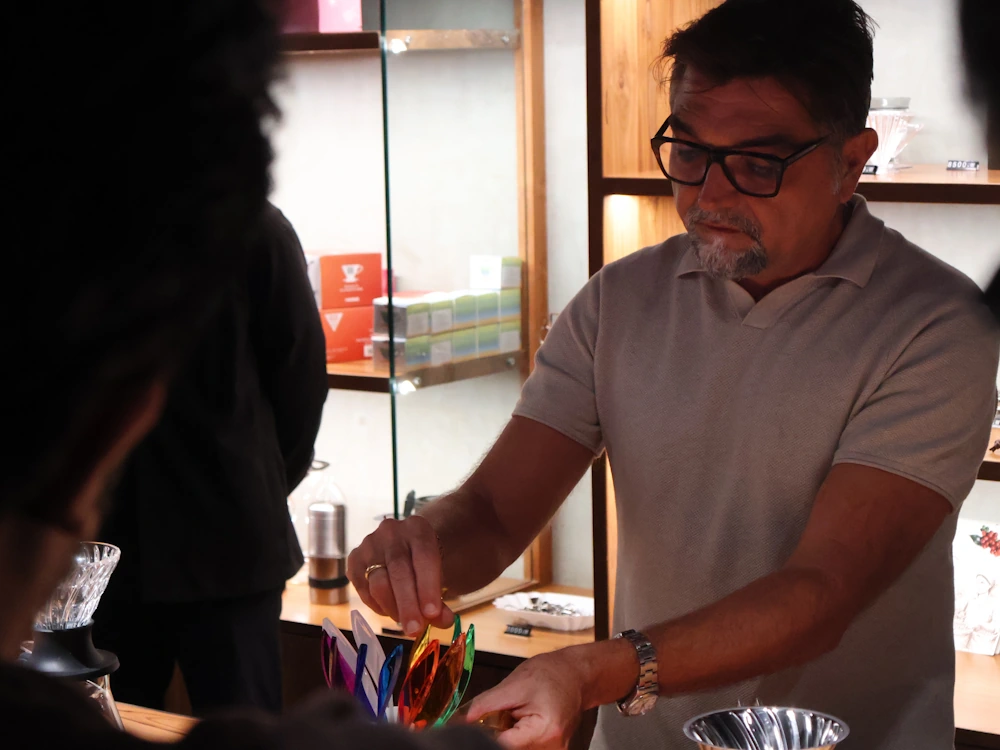
Marc cautions against treating expansion as an end in itself. “The easiest way to increase ticket value is often to add more products,” he says. “The better way is to add more meaning.” Every addition to a menu, he suggests, should answer one question: does it help the guest appreciate coffee more? If not, customers eventually notice, and trust, not short-term revenue, is what sustains a café over years.
The commercial logic supports this. Menu sprawl is one of the most common failures in food service; too many items lead to slower service, more waste, and inconsistent quality, all of which cost more than the incremental sales they generate. Speed of service remains the top reason customers choose quick-service cafés, so any addition that lengthens the queue carries a hidden price.
“One of the biggest mistakes is trying to increase ticket value through complexity,” Marc notes. The alternative is depth over breadth: fewer items, executed consistently, each with a clear reason to exist.
He is equally firm on who should do the selling. “Staff should never become salespeople. They should become hosts and storytellers,” he says. Curiosity-driven recommendations consistently outperform scripted upselling in building both ticket value and loyalty. The mechanism is simple: a recommendation from someone who cares about the product reads as hospitality, while a script reads as extraction.
The café as curated destination
For some operators, the answer is to rethink what the café is. The rise of artisanal one-stop-shops reflects a growing sense that coffee alone is sometimes not enough. These spaces combine natural wines, locally baked breads, small-batch beer, bean-to-bar chocolate, cheeses, cured meats, and even flowers or records under one roof, turning a morning espresso stop into a local destination.
Demand for this model has stemmed further afield. Farmers markets in the US have grown from 1,755 in 1994 to nearly 8,800 today, according to the USDA’s Agricultural Marketing Service, evidence of consistent appetite for local, sustainable produce.
Coffee shops can tap into the same appetite by serving seasonal menus, hosting events and pop-ups, and embedding themselves in their communities rather than operating as retail counters.
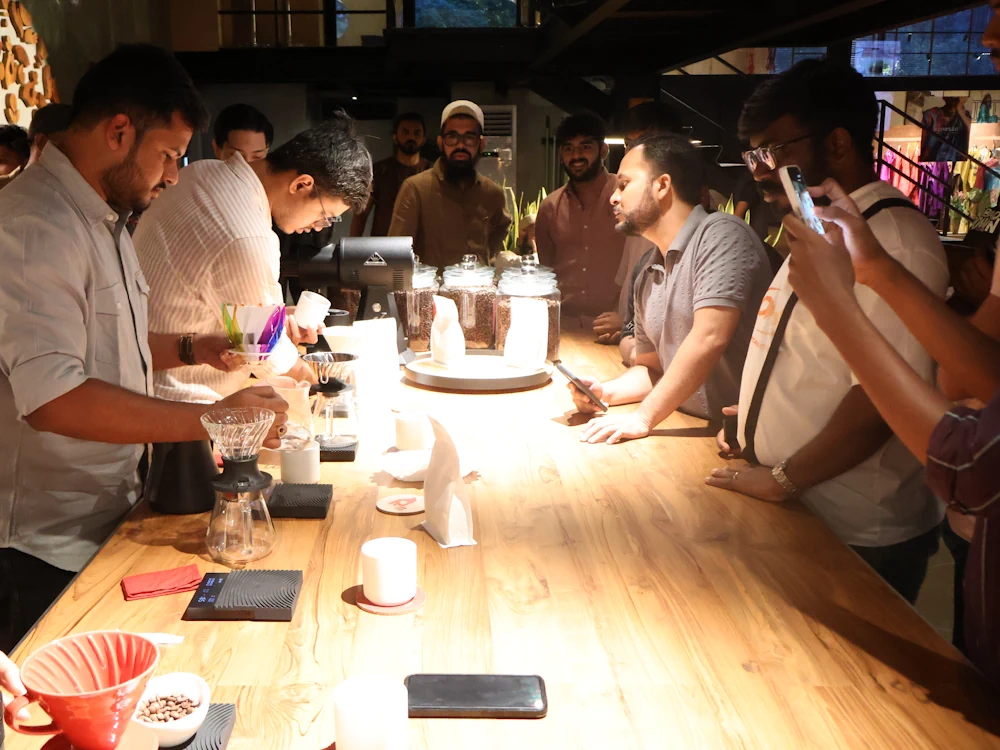
“I believe the future of specialty cafés lies in moving beyond serving beverages to creating memorable experiences,” Marc says. “People rarely remember the exact extraction yield of their espresso, but they remember how a place made them feel.”
But the model carries risk. Preparing goods in-house feels more authentic but requires a serious investment in space, staff, and expertise. The alternative is to partner with reliable suppliers whose values align with the café’s. Either way, the offering needs to sit within the team’s expertise. Focusing on a single cuisine or category works far better than spreading thin.
Increasing ticket value is no longer optional, but it doesn’t have to come at the expense of compromise. Effective approaches share a common thread: they add value for customers rather than asking them for more.
Cafés that focus on experience, education, and authenticity tend to find that higher ticket prices follow naturally.
Interested in making more sales? PDG Media specialises in growing sales for coffee businesses. Check them out here.
Increasing café ticket spend FAQs
Why is selling more coffee no longer enough to stay profitable?
Green coffee costs, wages, and rents have all risen faster than menu prices. With payroll consuming around a third of revenue at many independent coffee shops, higher transaction values now protect margins more effectively than higher volume.
How can coffee shops upsell without alienating customers?
Guide rather than push. Small prompts, such as suggesting a larger drink, a cold foam topping, or a pastry pairing, naturally increase ticket sales. Staff should act as hosts and storytellers, sharing recommendations driven by curiosity instead of scripts.
Should every coffee shop expand into food or retail?
No. Food and merchandise only pay off when the team executes them consistently within its expertise. Poorly managed additions increase waste, slow service, and dilute the brand. Simple entry points, such as baked goods or pre-made salads, carry less risk.
Photo credits: Naad Coffee
Perfect Daily Grind
Want to read more articles like this? Sign up for our newsletter!

Bhavi is an international coffee championship judge, a dairy technologist, a brand-building specialist, and a storyteller with a keen interest in coffee and tea.